
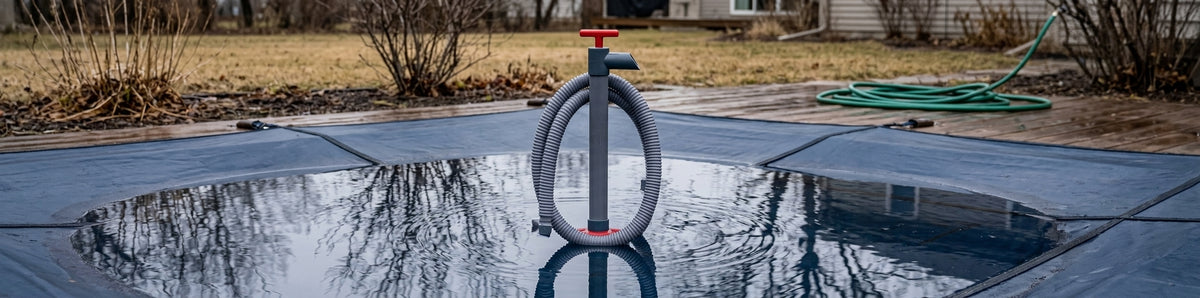
Collection: Cover Pumps
-
Danner Cover Care CC350 Pool Cover Pump, 350 GPH, 25 ft Cord, 3/4 in Garden Hose
Vendor:Danner Manufacturing Inc
CC350Regular price $127.00Regular priceUnit price per$222.20Sale price $127.00 -
Danner Cover Care CC500 Pool Cover Pump, 500 GPH, 25 ft Cord, 3/4 in Garden Hose
Vendor:Danner Manufacturing Inc
CC500Regular price $133.70Regular priceUnit price per$234.10Sale price $133.70 -
Little Giant PCPK-N Pool Cover Pump Kit, 300 GPH, 18 ft Cord with 25 ft Discharge Tubing
Vendor:Little Giant
PCPKNRegular price $236.00Regular priceUnit price per$391.60Sale price $236.00 -
Superior Pump 90091 Mag Drive Manual Pool Cover Pump, 810 GPH, 25 ft Cord
Vendor:Superior Pump
90091Regular price $73.60Regular priceUnit price per$139.60Sale price $73.60 -
Swimline 5436 Cover Saver Siphon Kit, Non-Electric Cover Drain for Above Ground Pools
Vendor:Swimline
SW5436Regular price $27.20Regular priceUnit price per$61.10Sale price $27.20 -
Little Giant 5-MSP Water Wizard Submersible Utility Pump, 1/6 HP, 1200 GPH, 18 ft Cord
Vendor:Little Giant
5MSP18Regular price $216.30Regular priceUnit price per$359.10Sale price $216.30 -
Superior Pump 91875 Manual Main Drain Utility Pump, 1/2 HP, 5580 GPH, 25 ft Cord
Vendor:Superior Pump
91875Regular price $315.40Regular priceUnit price per$515.10Sale price $315.40 -
Superior Pump 92788 Automatic Submersible Sump Pump, 3/4 HP, 4800 GPH, 2 in Discharge
Vendor:Superior Pump
92788Regular price $296.50Regular priceUnit price per$484.00Sale price $296.50 -
Little Giant 6-CIA-RFS Big John Automatic Submersible Sump Pump, 1/3 HP, 2760 GPH
Vendor:Little Giant
6CIARFSRegular price $286.80Regular priceUnit price per$468.20Sale price $286.80 -
Air Supply Cyclone Pro 3 HP Pool Winterizing Blower and Liner Vac, 120V, 1.5 in Outlet
Vendor:Air Supply of the Future
AS4128100PRegular price $424.60Regular priceUnit price per$688.70Sale price $424.60 -
Thirsty-Mate 136PF6 Manual Hand Bilge Pump, 36 in, 13 GPM, with 72 in Hose
Vendor:ThirstyMate
136PF6Regular price $98.90Regular priceUnit price per$183.60Sale price $98.90 -
Swimline 5420 Submersible Pool Cover Pump, 250 GPH, 25 ft Cord, 3/4 in Garden Hose
Vendor:Swimline
SW5420Regular price $61.60Regular priceUnit price per$120.20Sale price $61.60Sold out -
Swimline 5440 Submersible Pool Cover Pump, 500 GPH, 25 ft Cord, 3/4 in Garden Hose
Vendor:Swimline
SW5440Regular price $64.90Regular priceUnit price per$127.30Sale price $64.90Sold out


Pool Cover Pumps & Submersible Water Removal
Standing water is what destroys winter covers. A few inches of rain and snowmelt across a 20' x 40' cover weighs thousands of pounds, and that load stretches seams, pulls grommets, and drags leaves and silt straight into your pool the moment the cover gives. A pool cover pump keeps the top of the cover clear all winter. PST Pool Supplies carries submersible cover pumps, utility pumps, and non-electric siphons from Little Giant, Superior Pump, Danner, and Swimline.
For routine cover duty, a dedicated submersible cover pump is the right tool. The Swimline 5420 (250 GPH) and 5440 (500 GPH) and the Danner Cover Care CC350 and CC500 all run on a 25 ft cord with a 3/4" garden hose discharge, so you can drop one on the cover and run the hose off the deck. The Little Giant PCPK-N kit ships with 25 ft of discharge tubing included. If you want more throughput, the Superior Pump 90091 mag drive moves 810 GPH with no seals to fail. Danner's full Cover Care line is at Danner Manufacturing, and Superior's specs are at Superior Pump.
For bigger jobs there are true submersible utility and sump pumps: the Little Giant 5-MSP Water Wizard (1/6 HP, 1200 GPH), the Little Giant 6-CIA-RFS Big John automatic (1/3 HP, 2760 GPH), and the Superior Pump 92788 automatic (3/4 HP, 4800 GPH) or 91875 manual main drain pump (1/2 HP, 5580 GPH) for draining a pool down or emptying a flooded pit. Where there is no power at the pool, the Swimline 5436 Cover Saver siphon kit and the Thirsty-Mate 136PF6 hand bilge pump move water without electricity. The collection also includes the Air Supply Cyclone Pro 3 HP winterizing blower for line blowouts. Pair a pump with your pool cover and see the complete pool winterizing supplies range. Little Giant pump documentation is available from Franklin Electric.
Get a pool cover pump on the cover before the first heavy rain — replacing a stretched-out winter cover costs many times what the pump does.